.png)
Chapter 7 // The Art of the Games

Updated: Sep 2

Project Lead: Floyd Hall, Journalist & Cultural Producer
Large sporting events create a new chapter in the city's public art legacy.
Construction projects and public artworks are often visual cues that serve as the remnants and reminders of global games, with the former usually celebrated for how well they endure and the latter usually celebrated for how well they inspire. If you visit Atlanta today, it may not be obvious which sites and structures were born of Atlanta’s Olympics transformation, however many notable pieces of public art from that time period have become city landmarks on their own accord.
For Atlanta, the 1996 Olympics ushered in a transformational Cultural Olympiad that served as a catalyst for arts and culture programming in the city, along with a host of public art sculptures commemorating that time that still stand today.
The “Homage to King” sculpture near Boulevard and Freedom Parkway is one of the most visible landmarks in Downtown Atlanta. The steel plate sculpture by Xavier Medina-Campeny, which features a profile outline of Martin Luther King, Jr., was commissioned as a cultural exchange gift in 1996 from the city of Barcelona—which hosted the 1992 Summer Olympics—as a celebratory gesture from one host city to another.
The Olympic cauldron is perhaps the most singular visible signifier of the 1996 Summer Olympic Games. The sculpture, designed by artist Siah Armajani, held the Olympic flame that burned as the symbolic link to the games’ Ancient Greek origins, and currently serves as a visual anchor in the Summerhill neighborhood near Center Parc Stadium, formerly known as Centennial Olympic Stadium. It was the first Olympic cauldron commissioned from an artist rather than an engineer or architect, and throughout its 30 years as a public artwork it strikes the balance of being visible, yet not quite accessible, from atop its current perch on Capital Avenue as a part of a tower structure that features Olympic rings, a historical plaque, and commemorative panels that list medal recipients. While the cauldron’s status in its current location has been solidified for quite some time, there is conversation about whether it will be moved to a new site in the days or months ahead.
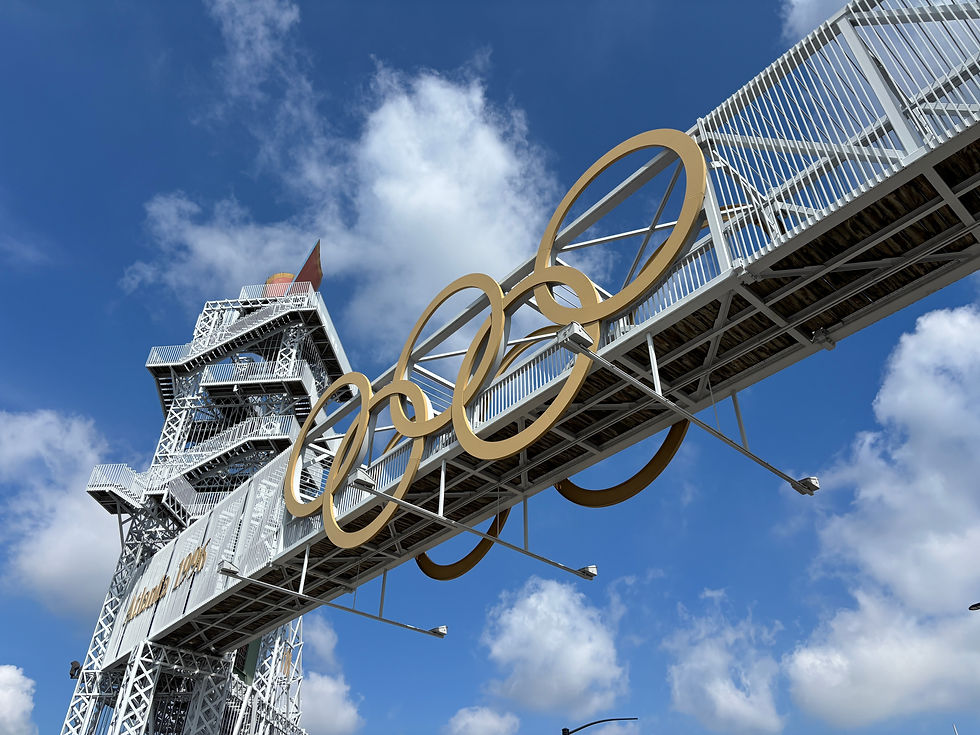
The artworks that mark international competitions take on interesting legacies in the years afterward, especially when it comes to stewardship, conservation, storytelling, and the associated costs of maintaining these landmarks. In this vein, the Atlanta Public Arts Legacy Fund was established in 1997 to maintain more than a dozen public art sites from the 1996 Atlanta Olympics. The fund has expanded its scope to address other artworks since its inception, yet it still acts as a catalyst for support for those initial Olympics-era sculptures, including the 2017 restoration of the Folk Art Park located downtown at Courtland St and Ralph McGill Boulevard.
Images 1-6: Folk Art Park
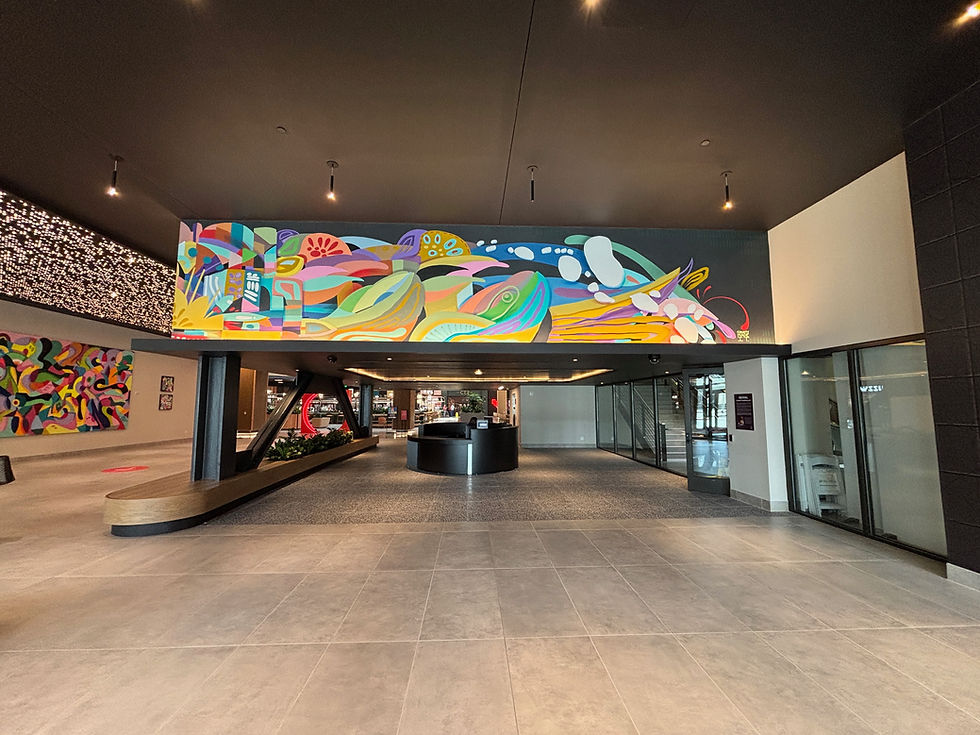
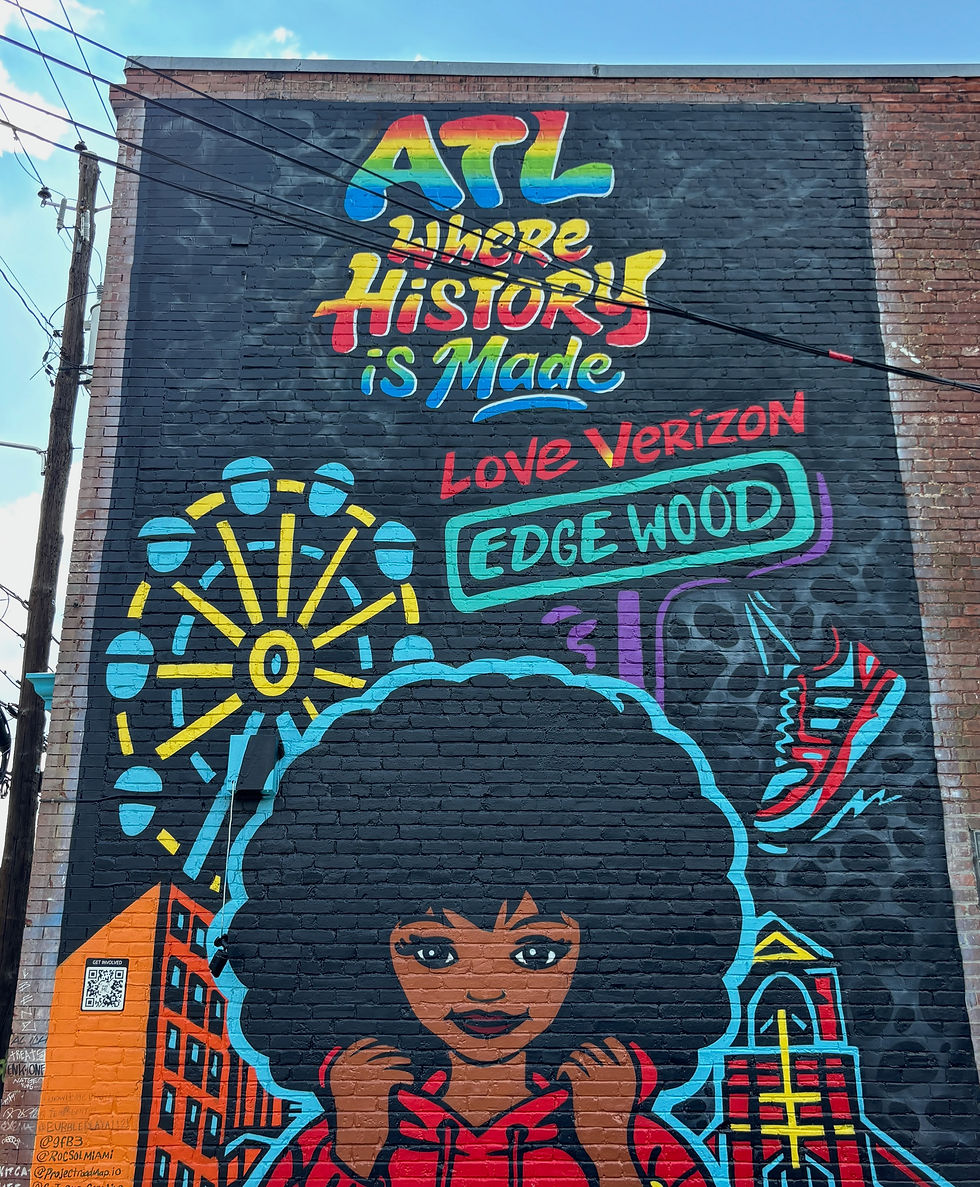
Fast forward to the 2026 FIFA World Cup experience in Atlanta, and we have recently witnessed a new era of investment in arts and culture to mark the occasion, primarily in the form of a wave of publicly accessible murals—on walls, bridges, overpasses, crosswalks, buildings, and interior spaces across the region. From a mural honoring the City of Atlanta from Spain's Royal Spanish Football Federation to a painted bridge section of 17th Street, it’s hard to miss these new works—often vibrant, colorful, and with Atlanta or soccer themes—featuring some of the city’s most recognized artists of the moment.
Yet, as the cultural fabric of the 2026 World Cup begins to strengthen in Atlanta alongside that of the 1996 Olympics, whether these works will earn the staying power of the those earlier sculptures will likely be determined by a number of factors, including how well they are maintained, ongoing funding support, our collective tastes around public art and, quite simply, time.
So as we begin to look toward Atlanta’s next large-scale sporting moments, it’s worth remembering that the accompanying public artworks are often more than passing celebrations of athletic spirit and our prominence as a host city; they are critical opportunities to shape the city’s infrastructure and creative landscape, potentially for generations to come.
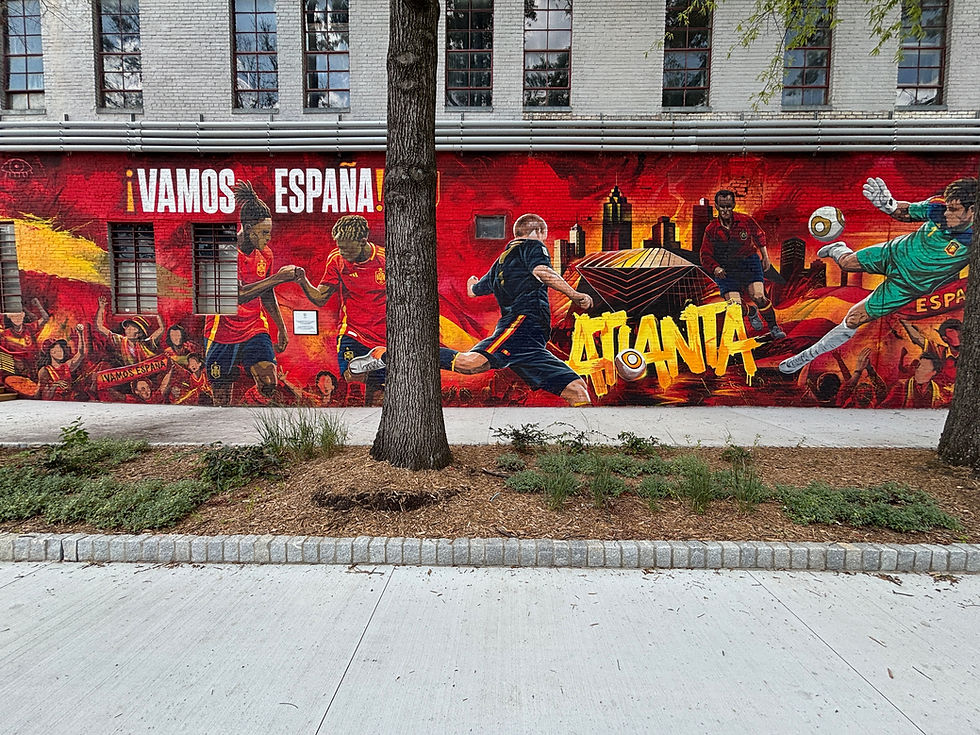
Image 1: RFEF Mural Plaque, Artwork Credit for Images 2-3: Melissa Mitchell


Comments